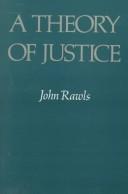
Liberalism holds that every person has rights no government may violate, such as the freedom to think, speak, believe, work and trade. Its core question is: how can people with different values live together in freedom? The answer involves the rule of law, separation of powers, tolerance, property and markets. Within it there are versions that rely more on free markets and versions that ask the state to secure the minimum conditions everyone needs to exercise their freedom.
Born between the 17th and 18th centuries, liberalism gained an economic foundation with Adam Smith, who showed how free exchange can create prosperity. In the 20th century, Friedrich Hayek defended the market against central planning, while John Rawls formulated a liberalism focused on social justice. Isaiah Berlin distinguished negative and positive liberty, and Martha Nussbaum developed the idea of human capabilities. In Brazil, José Guilherme Merquior sought to join liberty and social justice, and in Argentina Domingo F. Sarmiento linked liberalism and education.
Core ideas
The individual has rights that come before the power of the state.
Political power must be limited by laws, constitutions and elections.
A free society must make room for people with different beliefs.
Where to start reading
Each thinker's starter book, picked for beginners.