Analytic philosophy puts its trust in clarity: many philosophical problems arise from confusions in language and can be solved by carefully analyzing what we say. It uses formal logic as a tool, values precise arguments and works closely with mathematics and the sciences. Its core question is: what exactly does a statement mean, and under what conditions is it true? For this reason it tends to tackle well-defined problems, one at a time.
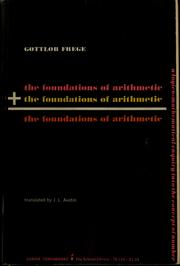
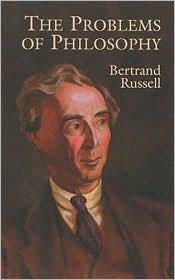
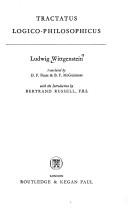
It emerged between the late 19th and early 20th centuries with Gottlob Frege, who created modern logic, and Bertrand Russell, who used it to analyze mathematics and ordinary language. Wittgenstein shaped two phases of the tradition: first he sought the logical structure of the world, then he studied the everyday uses of words. Karl Popper, a critic of part of the group, brought the same rigor to science, and the Brazilian Newton da Costa created paraconsistent logic. Today it is the dominant style in English-speaking universities.
Core ideas
Many philosophical problems come from confusions in how we use language.
Formal logic is an essential tool for thinking clearly.
A statement needs a clear meaning and definite conditions for being true.
Where to start reading
Each thinker's starter book, picked for beginners.