This group brings together thinkers who ask what the mind is and what is distinctive about human nature. Are we complex biological machines, animals with instincts and emotions inherited from evolution, or also bearers of a deep inner life that escapes measurement? The question touches concrete issues: consciousness, free will, the relation between brain and thought, and the way we treat people who suffer from mental illness.
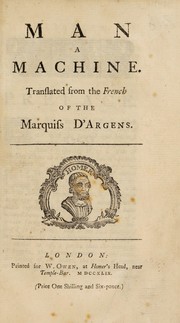
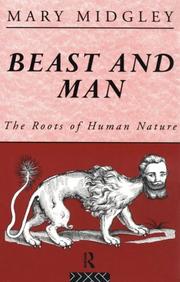
In the 18th century, La Mettrie scandalized Europe by describing the human being as a machine. Daniel Dennett revived materialism with cognitive science, explaining consciousness as a product of brain processes. Mary Midgley, also a naturalist, insisted that we are animals but criticized views that reduce the person to a mechanism. Nise da Silveira, a Brazilian psychiatrist inspired by Jung, revealed the richness of the unconscious through her patients' art. They disagree a great deal, but all take the body and inner life seriously.
Core ideas
The human mind can be studied as part of nature.
We are animals, and our emotions and instincts shape how we think.
Explaining the mind requires care not to reduce the person to a mechanism.
Where to start reading
Each thinker's starter book, picked for beginners.