Anarchism holds that the state and other forms of imposed authority, such as economic exploitation, are neither necessary nor legitimate. People would be able to organize themselves, in communities, cooperatives and free federations. Its core question is: what power over others can be justified? For anarchists, every hierarchy must prove its legitimacy, and most cannot. Individual freedom and collective solidarity must go together.
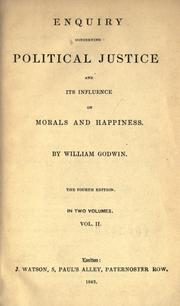
William Godwin laid its foundations in the late 18th century, and Proudhon was the first to call himself an anarchist, in 1840. Max Stirner defended a radical individualism that shaped individualist anarchism, while Mikhail Bakunin joined anarchism to the workers' struggle and broke with Marx. Emma Goldman brought these ideas to the United States and tied them to women's freedom. In Brazil, José Oiticica took part in the early 20th-century labor movement. Today Noam Chomsky defends libertarian socialism, and the tradition inspires experiments in self-management.
Core ideas
The state and imposed domination are neither legitimate nor necessary.
Every hierarchy must justify itself, and most cannot.
Society can organize itself through cooperation and voluntary association.
Where to start reading
Each thinker's starter book, picked for beginners.