

Empiricism
A tradition holding that all knowledge comes from experience and the senses, not from innate ideas.
Do you think in the way of Empiricism? Answer 44 to 132 statements and see your affinity with every school and every thinker.
What it is
Empiricism holds that the mind starts as a blank slate and that everything we know comes from experience. Its central question is how far experience can take us. If we only know what we perceive, what can we say about things we never observe directly, such as causation, substance or the self? Taken seriously, empiricism sets clear limits on what we can claim with confidence.
It developed mainly in the British Isles in the seventeenth and eighteenth centuries, with John Locke as a key reference. The Irish bishop George Berkeley radicalized the idea: to be is to be perceived, and only minds and their perceptions exist. The Scot David Hume showed that we never see causation, only repeated sequences, and that our belief in it comes from habit. Their ideas influenced Kant, the philosophy of science and the experimental method.
Core ideas
- All knowledge begins with the experience of the senses
- There are no innate ideas: the mind starts as a blank slate
- Belief in causation comes from habit, not pure reason
Where to start reading
Each thinker's starter book, picked for beginners.
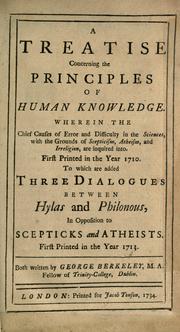
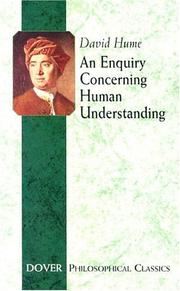
The thinkers
Where Empiricism stands on the 11 themes
Average position of the school's thinkers. Each theme runs from the first pole (−1) to the second (+1).
Neighboring schools
- Social contract theoryA tradition that explains society and government as the result of an agreement, or contract, among free and equal people.
- Confucianism and TaoismThe two great traditions of classical Chinese philosophy: one focused on social order and virtue, the other on harmony with the Tao.
- SkepticismA tradition that doubts we can reach certainty and proposes suspending judgment in order to live more calmly.