
David Hume
Archetype: Empiricist of Doubt
1711 to 1776 · Edinburgh, Scotland
“Reason is, and ought only to be, the slave of the passions.”
Do you think like David Hume? Answer 44 to 132 statements and find out who, among 130 thinkers, has the way of thinking closest to yours.
Who was David Hume
A Scottish philosopher and historian, Hume was one of the sharpest minds of the Enlightenment. He took empiricism to its ultimate consequences and showed that many everyday certainties, like the idea of cause and effect, come from habit and not from pure reason. His skepticism woke Kant and still shapes debates about science, morality and religion.
Core ideas
- All ideas are copies of impressions that arrived through the senses
- We do not see causation: we expect the future to repeat the past out of sheer habit
- Reason alone moves no one; it is passions and feelings that decide
The tradition: Empiricist
Empiricism says that all knowledge comes from experience, not from innate ideas. Hume is the most radical empiricist: he used this principle to show the limits of what reason can prove.
Learn more: Wikipedia
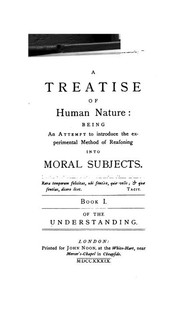
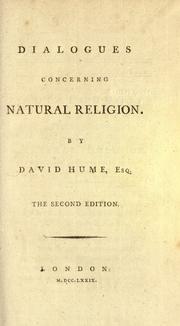
Books by David Hume
Three ways in. Start with the first.
Where David Hume stands on the 11 axes
Each axis runs from the first pole (−1) to the second (+1). These are the positions the test compares with your answers.


