Transcendentalism holds that every person has direct access to moral and spiritual truths through intuition, without depending on churches, traditions or majority opinion. Nature is seen as a place of revelation and inner renewal. Its core question is: how can one live authentically, true to one's own conscience? From this come its praise of self-reliance, simple living and contact with nature, and its refusal to obey laws judged to be unjust.
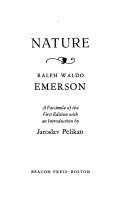
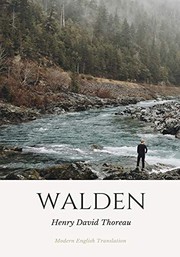
The movement arose in New England, in the United States, around 1830, inspired by European Romanticism, by Kant and by religious texts from India. Ralph Waldo Emerson was its leading thinker, with essays such as Nature and Self-Reliance. Henry David Thoreau, his friend, lived for a little over two years in a cabin by Walden Pond and wrote Civil Disobedience, defending the peaceful refusal of unjust laws. Their ideas influenced Gandhi, Martin Luther King Jr. and modern environmentalism.
Core ideas
Each person can reach truth through intuition and conscience.
Nature is a source of wisdom and spiritual renewal.
No one should obey a law their conscience judges to be unjust.
Where to start reading
Each thinker's starter book, picked for beginners.