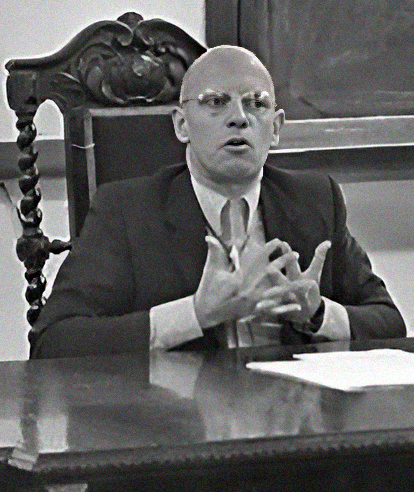
A French philosopher and historian who investigated how power operates in daily life, in prisons, hospitals, schools, and in the very idea of normality. He showed that categories such as madness, crime, and sexuality have a history and were shaped by knowledge and institutions. He visited Brazil several times and is one of the most cited authors in the humanities.
Core ideas
Power is not only in the State: it circulates in institutions and everyday relations
Knowledge and power are produced together, defining who is normal and who is deviant
The disciplinary society watches and trains bodies to make them docile and useful
The tradition: Post-structuralist
Post-structuralism inherited structuralism's focus on language and systems but rejected fixed, universal structures. Foucault, though he refused labels, is linked to this line for historicizing truths and powers.