Filosofômetro
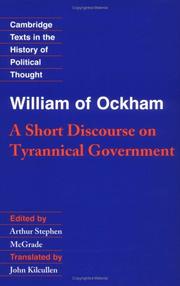
Portrait of William of Ockham
Nominalist · Medieval and Renaissance

William of Ockham

Archetype: Empiricist of Freedom

c. 1287 to 1347 · Oxford, England, and Munich, Germany

“Entities must not be multiplied beyond necessity.”

Do you think like William of Ockham? Answer 44 to 132 statements and find out who, among 130 thinkers, has the way of thinking closest to yours.

Who was William of Ockham

William of Ockham was an English Franciscan friar who studied at Oxford. He got into conflicts with the pope over the poverty of the Church and ended up taking refuge in Munich, under the emperor's protection. He is remembered for Ockham's razor, the principle that says not to multiply explanations without need.

Core ideas

  • We should not assume more entities than necessary to explain something
  • Only individual things exist, and universals are merely names and concepts
  • The pope's power has limits and must not override civil power

The tradition: Nominalist

A nominalist holds that general concepts, like humanity, are only names, and that only individuals exist. Ockham is the greatest defender of this thesis in the Middle Ages.

Learn more: Wikipedia

Where William of Ockham stands on the 11 axes

Each axis runs from the first pole (−1) to the second (+1). These are the positions the test compares with your answers.

Knowledge
ReasonExperience, strong · +0.70Experience
Will
FateFreedom, strong · +0.60Freedom
Meaning
Given meaningGiven meaning · −0.40Created meaning
Ethics
DutyDuty, strong · −0.60Consequences
Social life
IndividualIndividual · −0.20Community
Happiness
PleasureVirtue · +0.50Virtue
Reality
MatterSpirit, strong · +0.60Spirit
Truth
CertaintyDoubt · +0.20Doubt
Change
TraditionRupture · +0.30Rupture
Suffering
AcceptBalanced · +0.00Resist
Power
AuthorityAutonomy · +0.30Autonomy

Thinkers similar to William of Ockham

Which philosopher
thinks like you?

Start the test