
Averroes
Archetype: Essentialist of Certainty
1126 to 1198 · Córdoba, al-Andalus (modern Spain)
“Truth does not contradict truth.”
Do you think like Averroes? Answer 44 to 132 statements and find out who, among 130 thinkers, has the way of thinking closest to yours.
Who was Averroes
Ibn Rushd, known in the West as Averroes, was a judge, physician and philosopher in Muslim Córdoba. He wrote commentaries on Aristotle so thorough that Europeans simply called him The Commentator. He argued that philosophy and religion do not contradict each other, and his ideas stirred up the medieval Christian universities.
Core ideas
- Philosophy and religion seek the same truth and cannot contradict each other
- Those who are capable have a duty to study philosophy and use reason
- Aristotle's work is the highest point of human knowledge
The tradition: Aristotelian (falsafa)
Falsafa is the Arabic name for Greek-inspired philosophy in the Islamic world, and Aristotelian means one who follows Aristotle. Averroes is the greatest Aristotelian of this tradition.
Learn more: Wikipedia
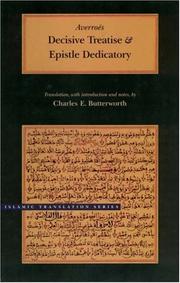
Books by Averroes
Three ways in. Start with the first.
Where Averroes stands on the 11 axes
Each axis runs from the first pole (−1) to the second (+1). These are the positions the test compares with your answers.


